• Skip to primary navigation
  • Skip to main content
  • Skip to primary sidebar
  • Skip to footer

Studio Guide

Tips for Teachers & Students

  • Home
  • Dance
  • Blog
    • Health & Wellbeing
    • Teaching & Studio Life
    • Movement & Fitness
    • Stage Entertainment
    • Creativity & Visual Arts
    • Dance
  • Ask a Question
  • About
  • Contact

Overcoming Stage Fright: Techniques Every Dancer Can Try

Last updated on July 26, 2026 by The Studio Guide Staff Leave a Comment

teenage girl ballerinas working on dance positioning

Stage fright is something almost every dancer experiences at some point. That nervous energy before stepping onto the stage can feel overwhelming, but it doesn’t have to hold you back. With the right techniques, you can turn that fear into focus, confidence, and even excitement. Here’s how to manage stage fright and perform your best.

Understand Stage Fright

Stage fright is a natural response to performing in front of others. Your body releases adrenaline, your heart rate increases, and your mind can become overactive. Understanding that this is a normal physical and mental reaction helps you view your nerves as a signal, not a threat. Once you recognize stage fright as a common experience, it becomes easier to approach with strategies to manage it.

Prepare Thoroughly

One of the most effective ways to reduce performance anxiety is preparation. Practicing your routine repeatedly builds muscle memory, so your body knows exactly what to do even if your mind feels nervous. Visualizing the performance in your mind, from start to finish, can also strengthen confidence. Imagine yourself executing every movement smoothly and confidently, hearing the music, and feeling the stage under your feet.
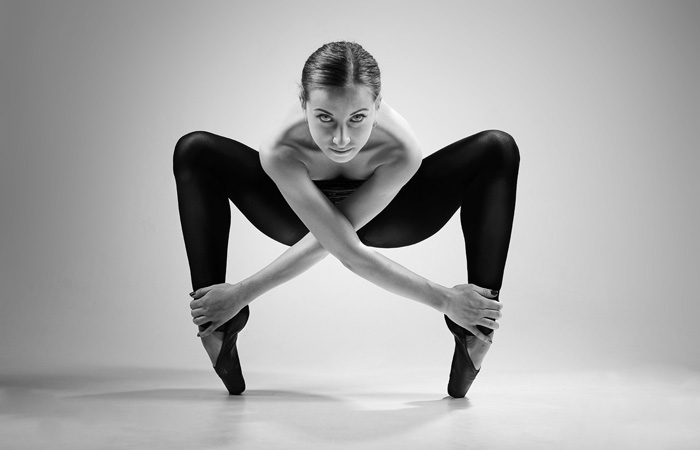
black and white portrait of teen ballerina posing

Use Breathing Techniques

When nerves hit, your breathing often becomes shallow, which can increase anxiety. Deep, controlled breathing helps calm your body and center your mind. A simple technique is to inhale deeply through your nose for a count of four, hold for four, and exhale slowly through your mouth for a count of six. Practicing this before and even during a performance can help reduce tension and improve focus.

Shift Your Focus

Stage fright often comes from worrying about what the audience will think. To counter this, shift your attention away from judgment and toward the movement itself. Concentrate on your technique, the story you are telling through your dance, or the music guiding your movements. By immersing yourself in the performance rather than external opinions, your nerves will naturally decrease.

group of costumed young girls performing in dance competition

Develop a Pre-Performance Routine

Creating a pre-performance ritual can help you feel grounded and ready. This could include a short warm-up, stretching, listening to favorite music, or quietly visualizing the performance. A consistent routine signals to your body and mind that it’s time to perform, turning anxiety into energy that enhances your presence on stage.

Learn from Every Performance

Even the most experienced dancers feel nervous sometimes. Each performance is an opportunity to learn and grow. Reflect on what went well, what could be improved, and how you felt during the experience. Over time, repeated exposure to performing will reduce fear and build confidence, transforming stage fright into excitement and focus.

Stage fright doesn’t have to stop you from dancing your best. By understanding your anxiety, preparing thoroughly, controlling your breathing, and focusing on your performance, you can turn nervous energy into a powerful ally. Every performance is a chance to grow – not just as a dancer, but as a performer confident enough to shine on stage.

Filed Under: Dance, Health & Wellbeing

Additional Articles

young ballerina fixing her hair into a bun before performance
Dancer Hair: What a Girl Needs To Know, Part 1
teen girl ballerinas wearing blue are best friends
Breast Care for Dancers: Comfort, Support, and Confidence in Class & Performance
Dancer Hair: What a Girl Needs To Know, Part 2
four happy teen ballerinas practicing in the dance studio
The Importance of Sleep for Optimal Dance Performance
young ballerina girl soundly sleeping in costume
Tips for Dancers: Four Steps for Healthier Sleep
ballerina with one foot bare with other foot wearing pointe shoe
Happy Feet for Dancers: Blister Care 101

Stock Imagery Copyright Information: The stock photos & stock imagery featured throughout the TheStudioGuide.com website are licensed through Shutterstock, Fotolia/Adobe & PhotoArtGraphy. Select image graphics/illustrations are created & provided by PhotoArtGraphy. The original photographers/graphic designers retain all image copyrights.

Reader Interactions

Leave a Reply Cancel reply

Your email address will not be published. Required fields are marked *

2 × 5 =

Primary Sidebar

About The Studio Guide
Follow The Studio Guide on Instagram Follow The Studio Guide on Facebook
PhotoArtGraphy with Drew Jensen

Dance Recitals & Competitions

  • Streamlining Your Dance Recital Planning
  • Dance Competition Planning: Find a Theme that Shines
  • Weighing the Advantages and Disadvantages of Dance Competitions

Article Categories

Nicholas Insurance Solutions

Dance Gear

  • Top Dancewear Companies & Dance Clothing Designers
  • Ballet Shoes for Beginners

The Dancer’s Body

  • Dancers: What It Means When Your Body Snaps, Crackles & Pops
  • What Turnout Actually Is (And What It Is Not)
  • Four Steps for Healthier Sleep
  • Dance Kinesiology - Understanding the Dancer's Body, Part 1 · Part 2
  • Breast Care for Dancers: Comfort, Support & Confidence
  • Female Dance Hygiene Tips for Class: Helping Dancers Stay Comfortable & Confident
  • Why Young Dancers Experience Overuse Injuries
PhysioDC of Washington, DC

PhotoArtGraphy

  • Why Aspiring Models Choose PhotoArtGraphy
  • Tips for Taking Dance Photos in Fluorescent-Heavy Studios

Popular Articles

  • 100 Dance Quotes & Sayings for Social Media
  • 6 Steps to Choreographing Your First Dance Solo
  • How Old Should a Child Be to Begin Competitive Swimming?
  • Dancer Life: What To Do When Bullying Happens To You · Part 2 · Part 3
X10 Home Automation

Recent Articles

  • Dancer Life: What To Do When Bullying Happens To You, Part 2
  • Dancer Hair: What a Girl Needs To Know, Part 1
  • The Importance of Protein for Dancers
  • Reconnecting with Non-Returning Dance Students: How To Do It
  • A Dance Studio Owner’s Guide to Insurance, Part 1
  • Why Aspiring Models Choose PhotoArtGraphy

Footer

About The Studio Guide

The Studio Guide is an educational resource for dancers, performers, studios, parents, and youth activity communities. Our articles focus on training, wellness, creativity, performance, and studio life across a variety of artistic and athletic disciplines.

Featured Creative Resource

Our sister brand, PhotoArtGraphy, provides photography services and creative workshops related to dance, performance, youth arts, and studio communities throughout portions of Pennsylvania and Maryland.

Visit PhotoArtGraphy.com.

Connect with The Studio Guide

Have feedback, article ideas, or questions? We'd love to hear from you. Follow The Studio Guide on social media anytime.

Instagram Facebook

Contact The Studio Guide

Copyright © 2026 The Studio Guide · Privacy Policy · Disclaimer · Sitemap · Created by Sozo Creative

The Studio Guide does not provide medical advice, treatment, or diagnosis. Content on this website is intended for general educational and informational purposes only and should not replace professional medical advice.

FTC Disclosure: TheStudioGuide.com participates in affiliate advertising programs, including the Amazon Associates Program. Affiliate commissions help support the continued operation and maintenance of this website.

The Studio Guide is operated by Sozo Firm Inc.

If any part of this website is difficult to access or use, please contact us at 717-885-2312 and we will gladly assist you.

Stock imagery & custom graphics licensed through PhotoArtGraphy, Shutterstock, and Adobe Stock.