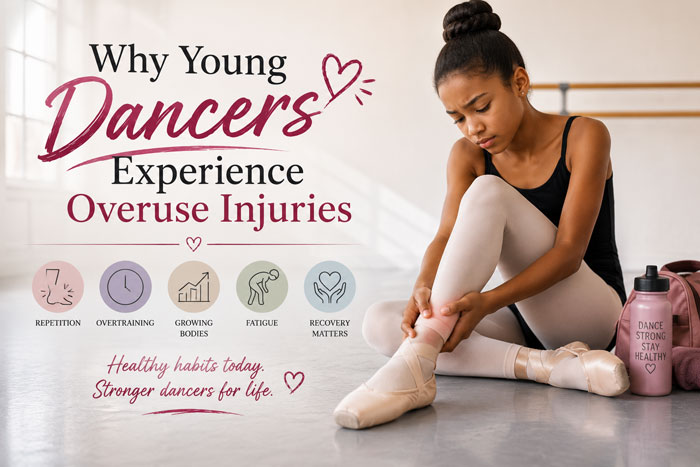
Dance is physically demanding in ways many people outside the dance world do not fully realize. While audiences often see grace, artistry, and performance, dancers experience repetitive movement patterns, intense training schedules, muscular fatigue, impact forces, and long hours of technical practice behind the scenes.
For young dancers especially, the physical demands of training can sometimes exceed what growing bodies are fully prepared to handle. As dance participation has become more competitive and year-round, conversations surrounding overuse injuries in young dancers have become increasingly important.
Understanding why overuse injuries occur can help dancers, parents, and instructors create healthier training environments that support long-term development rather than short-term burnout.
What Is an Overuse Injury?
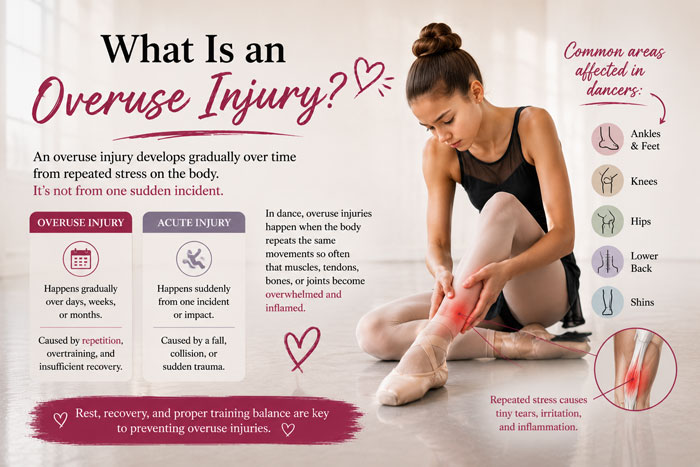
An overuse injury develops gradually over time rather than resulting from one sudden traumatic event.
Unlike an acute injury – such as a fall, sprain, or collision – overuse injuries often emerge after repeated stress is placed on muscles, tendons, bones, joints, or connective tissues without adequate recovery.
In dance, this can happen because the body performs the same types of movements repeatedly:
- jumping
- landing
- turning
- pointing the feet
- maintaining turnout
- balancing
- stretching
- rehearsing choreography
When these movement demands accumulate faster than the body can recover, tissues may begin experiencing irritation, inflammation, strain, or mechanical stress.
Young dancers are particularly vulnerable because their bodies are still growing and developing.
Growing Bodies Respond Differently to Stress
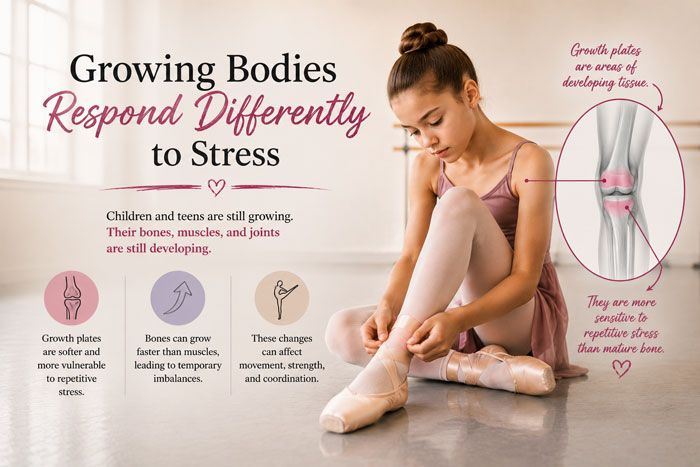
Children and teenagers are not simply “smaller adults.” Their bones, muscles, tendons, and growth plates are still maturing.
Growth plates are areas of developing tissue near the ends of bones. During childhood and adolescence, these areas are more vulnerable to repetitive stress than fully matured bone.
At the same time, young dancers often experience periods where bones grow rapidly while muscular strength, coordination, and flexibility temporarily lag behind. This can create short-term imbalances that affect movement mechanics.
A dancer who previously moved with ease may suddenly feel tighter, less coordinated, or more fatigued during a growth spurt. These changes are normal, but they can increase physical stress if training intensity remains extremely high.
Repetition Is a Major Factor in Dance Training
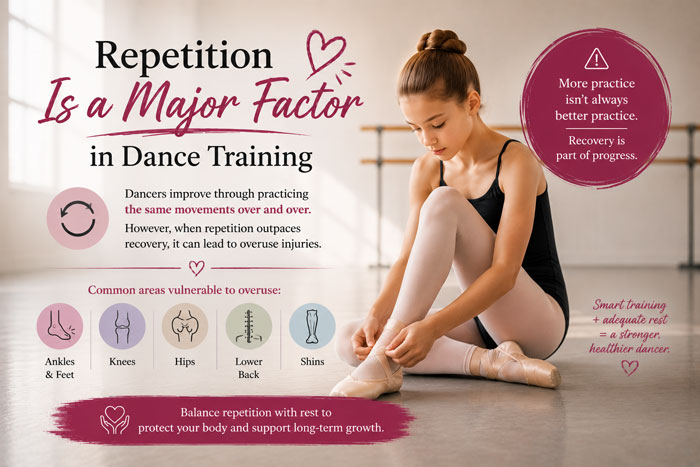
Dance technique requires repetition. Dancers improve through practicing movements over and over again.
However, repetition can become problematic when recovery does not keep pace with workload.
For example, a young dancer may spend hours repeatedly:
- jumping
- rehearsing turns
- working en pointe
- practicing extensions
- drilling choreography for competitions or performances
Even technically correct movement patterns can eventually create stress when repeated excessively without sufficient rest.
Certain areas of the body are especially vulnerable in dancers, including:
- ankles
- feet
- knees
- hips
- lower back
- shins
The more training volume increases, the more important recovery and movement balance become.
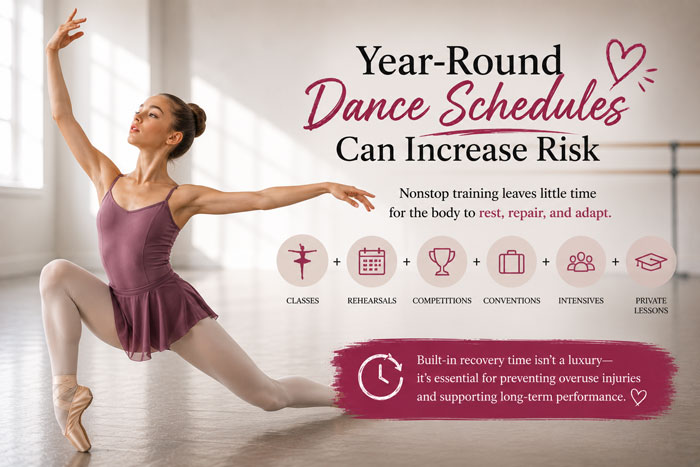
Year-Round Dance Schedules Can Increase Risk
In previous decades, many young dancers experienced clearer “off seasons” during the year. Today, many students train continuously through:
- regular classes
- rehearsals
- conventions
- competitions
- intensives
- camps
- private lessons
Some dancers rarely receive extended periods of physical recovery.
While dedication and consistency are important, the body still needs time to repair and adapt. Recovery is not a sign of weakness or laziness. It is part of the physical development process.
Without adequate recovery, fatigue can begin accumulating beneath the surface even when a dancer appears motivated and determined.
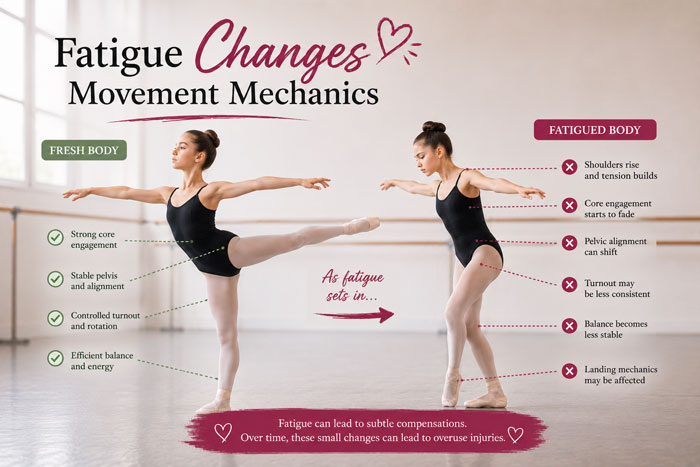
Fatigue Changes Movement Mechanics
One of the biggest concerns with fatigue is that it can alter movement quality.
As muscles become tired, dancers may begin:
- landing less efficiently
- losing alignment
- gripping unnecessarily
- compensating in other joints
- relying on momentum rather than control
These subtle mechanical changes may not always be obvious at first, but over time they can increase stress throughout the body.
For example, a fatigued dancer may:
- roll inward on the feet during landings
- struggle to maintain pelvic alignment
- lose hip stability during turnout
- place more strain on the knees or lower back
Over time, repetitive compensations can contribute to irritation and overuse problems.
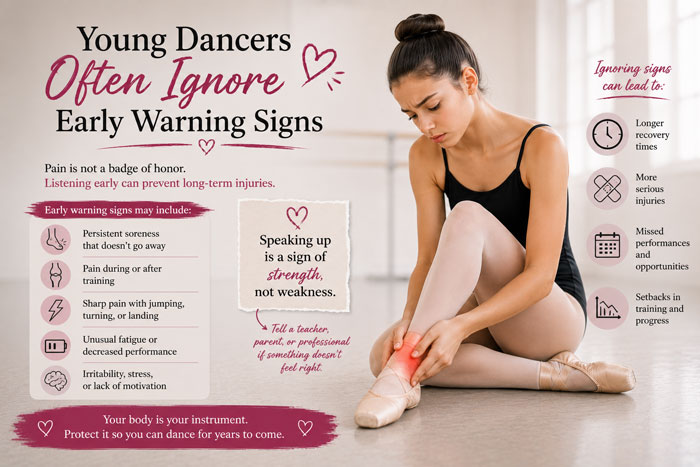
Young Dancers Often Ignore Early Warning Signs
Many dancers are highly disciplined and motivated. Unfortunately, that determination sometimes causes students to ignore discomfort that should not be ignored.
Young dancers may fear:
- falling behind
- disappointing teachers
- losing casting opportunities
- missing performances
- appearing weak
As a result, they sometimes continue training through pain or excessive fatigue.
Parents and instructors may also unintentionally reinforce this mindset when hard work is praised without equal attention given to recovery and physical wellbeing.
There is an important difference between normal training discomfort and persistent pain. Learning to recognize that difference is an important part of long-term dancer health.
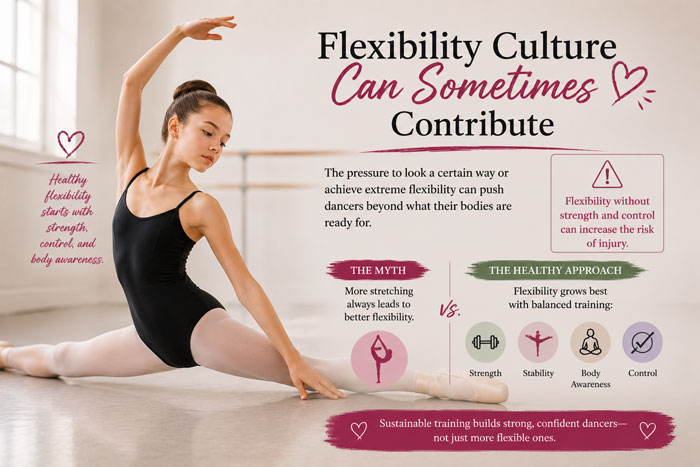
Flexibility Culture Can Sometimes Contribute
In some areas of dance culture, there can be intense pressure surrounding flexibility and extreme movement aesthetics.
Social media has amplified this even further. Young dancers constantly see images and videos showcasing:
- oversplits
- extreme back flexibility
- highly advanced extensions
- hypermobility
- dramatic tricks
This sometimes encourages dancers to push aggressively beyond what their bodies can safely control.
Flexibility without strength and stability can create additional vulnerability. Healthy dance training involves balancing:
- mobility
- strength
- coordination
- alignment
- control
rather than pursuing flexibility alone.
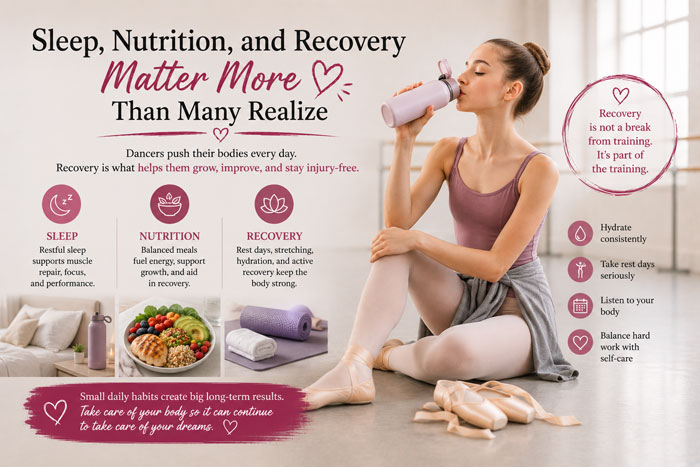
Sleep, Nutrition, and Recovery Matter More Than Many Realize
Young dancers often juggle:
- school
- homework
- rehearsals
- competitions
- social pressures
- busy family schedules
As schedules become packed, sleep and recovery sometimes suffer.
Yet recovery systems are essential for physical adaptation. Muscles repair during recovery periods, and fatigue accumulates more rapidly when dancers consistently lack adequate sleep, hydration, nutrition, or downtime.
Highly active dancers need fuel and recovery support appropriate for their activity level.
Physical stress and emotional stress can also interact. Mental exhaustion, anxiety, and burnout sometimes affect physical performance and recovery as well.
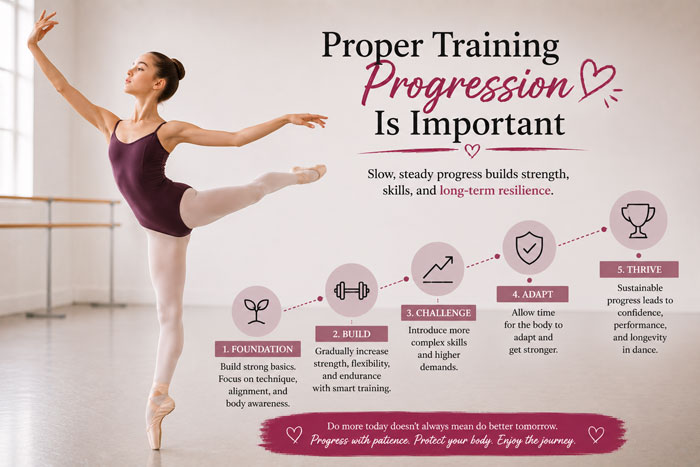
Proper Training Progression Is Important
One of the healthiest approaches to dance training involves gradual progression.
Strength, turnout control, pointe readiness, flexibility, endurance, and technical difficulty typically develop best when built progressively over time.
Problems sometimes arise when dancers increase workload too quickly without allowing the body to adapt.
This is especially important during:
- growth spurts
- new training seasons
- intensive programs
- competition preparation
- transitions to pointe work
- sudden schedule increases
Gradual progression often supports healthier long-term development than constantly pushing maximum intensity year-round.
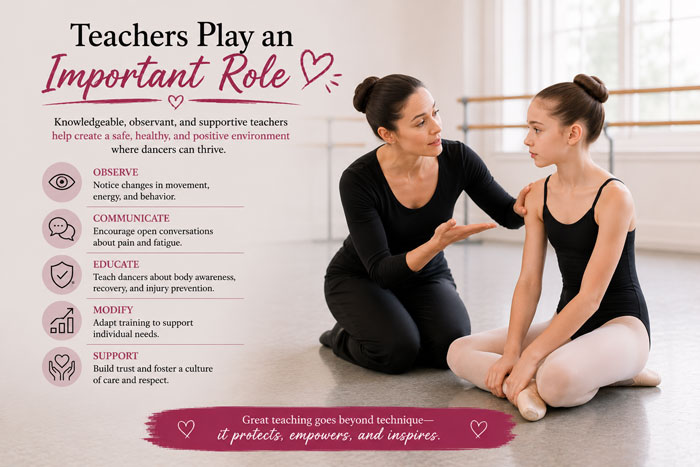
Teachers Play an Important Role
Dance teachers can have tremendous influence on how students view training, recovery, and physical health.
Instructors who emphasize:
- alignment
- movement quality
- body awareness
- proper progression
- rest when needed
- healthy technique
often help create more sustainable training environments.
Students benefit greatly when teachers normalize communication about fatigue, discomfort, and recovery instead of treating pain as something dancers should simply ignore.
Strong technique is not built solely through pushing harder. Often, it is built through training smarter.

Parents Can Help Support Healthy Habits
Parents also play an important role in supporting healthy dance participation.
Encouraging balance, adequate sleep, nutrition, hydration, and open communication can help dancers navigate demanding schedules more safely.
It can also be helpful for parents to remember that more training is not always better training. Motivation and passion are wonderful qualities, but young bodies still require recovery.
Long-term health and sustainable development should remain priorities throughout a dancer’s journey.
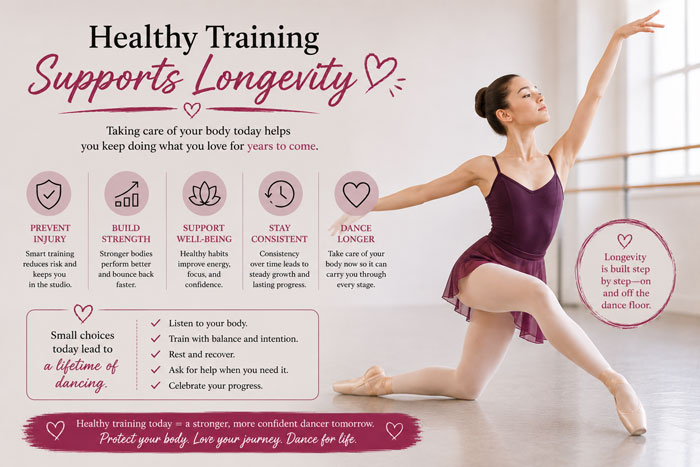
Healthy Training Supports Longevity
Dance is an art form that combines athleticism, discipline, creativity, and expression. Young dancers often love what they do deeply, which is part of what makes them work so hard.
Understanding overuse injuries does not mean dancers should become fearful of training. Instead, it encourages a more balanced perspective – one that recognizes the importance of recovery, proper progression, strength, alignment, and listening to the body.
Healthy training habits developed early can help dancers move more efficiently, perform more confidently, and enjoy dance for many years to come.
This article is intended for educational purposes related to dance training and movement mechanics. It is not medical advice or a substitute for professional medical evaluation or treatment.
Leave a Reply