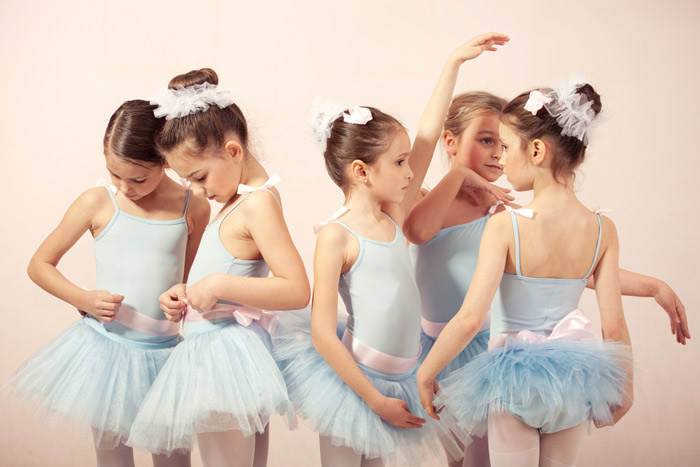
One of the most common frustrations dance parents experience is level placement.
Your child is 10 years old – so why is she in a class with 8-year-olds?
Your 13-year-old has been dancing for years – so why wasn’t she moved up with her friends?
It’s natural to equate advancement with age or grade in school. In academics, students typically move forward year by year. In dance, however, progression works differently.
Advancement in dance is about readiness – not birthdays.
Understanding why can help parents support their dancers with clarity and confidence.
Dance Is a Skill-Based Art Form
Dance training is cumulative. Each level builds on specific technical foundations that must be solid before moving forward.
In ballet especially, advancement depends on strength, alignment, musicality, and mastery of vocabulary. Systems such as the Royal Academy of Dance and Cecchetti International outline detailed syllabi where students progress based on technical competency – not age alone.
For example, a dancer may be 12 years old but still working to develop consistent turnout from the hips or stable single pirouettes. Promoting her prematurely could result in frustration or injury when combinations become more advanced.
Unlike school grades, dance levels are not about keeping peers together. They are about preparing the body and mind for increasingly complex movement.
Physical Development Varies Widely
Children develop at different rates.
Some 11-year-olds have the coordination and strength of a much older student. Others are in the middle of growth spurts that temporarily affect balance, flexibility, and spatial awareness.
During periods of rapid growth, dancers often feel awkward or “off.” Limbs lengthen quickly, and muscle strength may lag behind bone growth. Moving a dancer up during this stage can magnify technical instability.
Teachers consider factors such as:
- Core strength
- Ankle stability
- Postural control
- Ability to maintain alignment under fatigue
These qualities don’t always align neatly with age.
A slightly younger dancer with strong foundational technique may be more prepared for the next level than an older dancer still solidifying basics.
Advancement Requires Consistency
Attendance plays a larger role in placement than many parents realize.
If two dancers are the same age but one trains three times per week while the other attends once weekly, their progression will differ significantly. More consistent practice leads to faster neuromuscular adaptation and skill retention.
Studios often structure upper levels assuming multiple weekly ballet classes. A dancer who hasn’t built that training volume may not yet be ready = regardless of age.
This isn’t a punishment. It’s protection.
Promoting a dancer into a technically demanding level without adequate preparation can damage confidence more than waiting an extra year.
Emotional Maturity Matters
Advancement is not purely physical.
Higher-level classes often move faster, include more complex choreography, and demand greater self-correction. Dancers are expected to retain combinations quickly and apply subtle corrections independently.
Some younger students thrive in this environment. Others need more time to develop focus, discipline, and resilience.
Emotional readiness includes:
- Handling corrections without tears
- Managing frustration constructively
- Maintaining concentration during longer classes
- Working collaboratively with older peers
These qualities are just as important as technical skill.
Comparison Can Distort Perspective
It’s difficult when friends move up and your child does not. Social dynamics are real, and dancers often identify strongly with their peer group.
But comparison can obscure individual growth.
Dance is not a race. A dancer who progresses steadily and safely often surpasses peers later because her foundation is secure.
Parents sometimes worry that staying in the same level means stagnation. In reality, it can mean refinement – strengthening muscles, cleaning technique, and building confidence.
The long-term goal is sustainability, not speed.
Why Holding a Level Can Be a Gift
Spending an extra year in a level can provide:
- Leadership opportunities
- Technical polish
- Increased confidence
- Stronger conditioning
- Injury prevention
A dancer who feels capable and competent in her class is more likely to take artistic risks and develop performance quality.
On the other hand, a dancer placed too high may spend the entire year struggling just to keep up.
Progress feels better – and lasts longer – when it’s earned.
How Studios Determine Placement
Most reputable studios consider multiple factors:
- Teacher evaluations throughout the year
- Technical assessments
- Strength and alignment
- Attendance history
- Work ethic
- Maturity
In ballet programs aligned with structured syllabi, advancement may also be tied to exam readiness or mastery of required vocabulary.
If you’re unsure how your child’s studio determines levels, it’s appropriate to ask for clarification. A thoughtful teacher should be able to explain placement decisions clearly and professionally.
What Parents Can Say at Home
Your response to placement matters deeply.
If your child is disappointed, acknowledge her feelings without reinforcing the idea that advancement equals worth.
Instead of saying, “That’s not fair,” try:
- “Your teacher wants to make sure you’re strong and ready.”
- “Building a solid foundation will help you later.”
- “Progress in dance isn’t always fast, but it is steady.”
Children often mirror their parents’ perspective. If you approach placement calmly and confidently, your dancer is more likely to do the same.
The Bigger Picture
In professional training environments, advancement is always based on readiness – not age. Even within prestigious institutions, dancers are placed where their technique best aligns.
The same philosophy applies in youth studios.
A dancer’s journey is long. Rushing levels rarely produces lasting success. Careful progression builds strength, artistry, and confidence over time.
Final Thoughts
Advancement in dance is not a birthday gift. It’s a reflection of preparation.
When placement is based on skill rather than age, dancers develop:
- Stronger technique
- Healthier bodies
- Greater resilience
- Deeper artistry
As a parent, your role is not to accelerate the timeline – but to support it.
Because in dance, the strongest foundations often create the most beautiful futures.
Leave a Reply