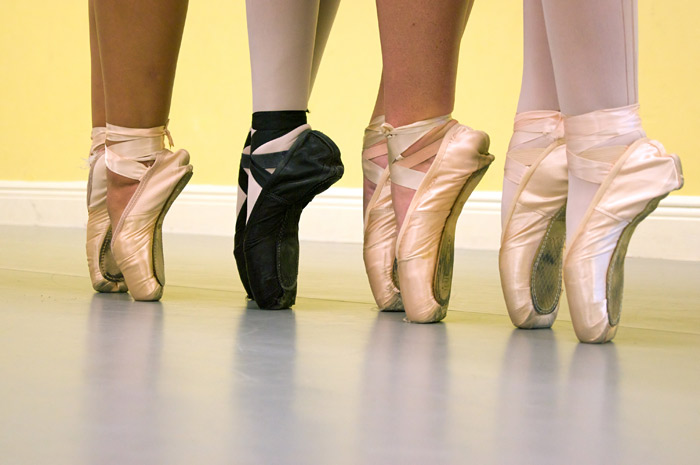
Few milestones in ballet feel as exciting – or as nerve-wracking – as pointe shoes. For many young dancers, dancing en pointe represents dedication, progress, and the dream of becoming a “real ballerina.” For parents, however, it often raises one big question:
When is the right time?
The answer is not based on age alone. Starting pointe too early can increase the risk of injury, while starting at the right time can be a beautiful and empowering transition. Here’s what every dance parent should know.
Physical Maturity Matters More Than Age
Many parents hear that dancers begin pointe around age 11 or 12. While that’s common, age is only one piece of the puzzle.
Children’s bones grow from areas called growth plates, which are softer and more vulnerable to stress. If a dancer begins pointe before the feet, ankles, and legs are strong enough to support their body weight, those growth plates can be compromised.
Organizations such as the American Academy of Pediatrics emphasize that repetitive stress on immature bones can lead to long-term injury. Pointe work places significant vertical pressure on the foot – far more than flat ballet technique.
Some dancers are physically ready at 11. Others may need to wait until 13 or even later. Readiness is about strength and alignment, not a birthday.
Strong Ballet Foundation Comes First
Before a dancer even tries on pointe shoes, she should have a consistent and solid ballet foundation.
Most reputable ballet programs require:
- At least 2–3 years of regular ballet training
- Multiple ballet classes per week
- Strong understanding of alignment and turnout
- The ability to hold correct posture consistently
Dancers who only take one recreational ballet class per week are usually not building enough technical strength for safe pointe work.
A structured ballet program – such as those following the traditions of the Royal Academy of Dance or the Cecchetti International – typically has clear criteria for pointe readiness. These systems emphasize gradual progression and technical mastery before advancement.
If your child’s studio does not have clear standards, it’s reasonable to ask how they determine readiness.
Strength & Alignment Are Key
Pointe is not just about having “strong feet.” It requires strength in the entire body.
A dancer should demonstrate:
- Strong ankle stability (no sickling or rolling in)
- Core engagement
- Proper pelvic alignment
- Straight knees without hyperextension collapse
- The ability to rise into a high demi-pointe with control
Teachers often look for whether a dancer can hold balance in retiré and complete controlled relevés without wobbling. If alignment falls apart in soft shoes, pointe shoes will magnify the problem.
A qualified ballet instructor will usually assess these factors carefully before recommending pointe.
The Role of Pre-Pointe Classes
Many studios now offer pre-pointe classes. These are excellent stepping stones.
Pre-pointe work focuses on:
- Strengthening intrinsic foot muscles
- Improving ankle stability
- Building calf endurance
- Reinforcing turnout from the hips
- Teaching proper toe alignment
These classes allow dancers to prepare safely without the added load of full pointe shoes. For many parents, pre-pointe provides reassurance that progress is happening – even if the actual pointe shoes are still months away.
Patience during this stage can prevent years of frustration later.
Emotional Readiness Counts Too
Physical readiness is only half the equation. Pointe requires discipline and maturity.
Your dancer must:
- Listen carefully to corrections
- Resist showing off or pushing beyond instructions
- Communicate about pain honestly
- Understand that pointe work progresses slowly
The early months of pointe are often spent at the barre, doing simple rises. There are no dramatic turns or center combinations at first. A dancer who expects instant glamour may feel disappointed.
Emotionally mature dancers are more likely to respect the gradual process and avoid unsafe shortcuts.
Pain vs. Injury: What Parents Should Know
Pointe work is uncomfortable at first. There is pressure on the toes, and muscles will fatigue.
However, sharp pain, lingering joint soreness, or swelling are not normal and should not be ignored.
If your dancer complains of:
- Persistent ankle pain
- Pain on the top of the foot
- Swelling around the toes
- Pain that worsens over time
It may be wise to consult a medical professional familiar with dancers. Early intervention can prevent more serious conditions such as stress fractures or tendonitis.
Open communication between parent, dancer, and teacher is essential.
Beware of Outside Pressure
It can be hard when “everyone else” in your child’s class seems to be starting pointe. But comparison is not a reliable indicator of readiness.
Studios vary widely in their standards. Some move students onto pointe as a marketing milestone. Others are extremely conservative.
Starting later is far safer than starting too soon.
Remember: in professional training environments, advancement is based on strength and readiness – not peer timelines.
Questions to Ask Your Child’s Teacher
If you’re unsure whether your dancer is ready, consider asking:
- What specific criteria do you use to determine pointe readiness?
- How many ballet classes per week are required?
- Do you offer pre-pointe conditioning?
- Will the first months be limited to barre work?
- How do you monitor students for injury?
A confident and qualified teacher should be able to answer these clearly.
The Bottom Line
Most dancers begin pointe between ages 11 and 13 – but the real answer depends on strength, training consistency, alignment, and maturity.
There is no prize for starting first. In fact, the dancers who wait until their bodies are truly ready often progress faster and more safely once they begin.
Pointe is a beautiful milestone. With patience, proper training, and thoughtful guidance, it can also be a safe and empowering one.
And as a parent, your greatest role is not rushing the moment – but protecting the dancer who will step into those shoes.
Leave a Reply