
For dancers, food is more than simply something that tastes good or satisfies hunger. Food is fuel. The body relies on nutrition to jump, turn, balance, stretch, stabilize, and perform with both strength and control. Yet many dancers struggle to figure out what they should eat before class – and just as importantly, when they should eat it.
Some dancers arrive at class feeling overly full and uncomfortable. Others show up exhausted because they have not eaten enough. Some experience nausea, cramping, dizziness, shakiness, or fatigue during training and do not immediately realize that nutrition timing may be contributing to the problem.
Learning how to fuel the body properly before dance class is an important part of healthy training. Good nutrition habits can help dancers improve focus, energy, endurance, recovery, and overall comfort during movement.

Dance Requires Significant Energy
Many people underestimate how physically demanding dance can be.
Dance combines athletic movement with artistry, precision, emotional expression, flexibility, coordination, and endurance. During class, dancers may spend long periods balancing, jumping, traveling across the floor, repeating choreography, or holding difficult positions that require tremendous muscular control.
All of this requires energy.
When dancers do not eat enough before class, the body may struggle to keep up with those physical demands. Low energy levels can contribute to fatigue, poor concentration, shakiness, dizziness, weakness, headaches, and even stomach discomfort.
Young dancers are especially vulnerable to inconsistent eating habits because busy schedules sometimes make it difficult to eat balanced meals at ideal times.

Eating Too Close to Class Can Cause Discomfort
One of the most common mistakes dancers make is eating a large meal immediately before class begins.
During digestion, the body directs energy toward processing food. Intense physical activity can interfere with this process, especially if the stomach is overly full. As a result, dancers may experience bloating, cramping, nausea, acid reflux, or a heavy sluggish feeling while moving.
Certain types of movement can make the discomfort even worse. Turns, jumps, floor work, and abdominal contractions may place additional pressure on the stomach.
This does not mean dancers should avoid eating altogether before class. In fact, under-eating often creates a completely different set of problems. The goal is usually finding a comfortable balance between being properly fueled and not feeling overly full.

Timing Matters
Every dancer’s body responds somewhat differently to food, but timing often plays a major role in how comfortable a dancer feels during training.
Larger meals are generally easier to tolerate when eaten farther away from class time, allowing the body more opportunity to digest comfortably before intense movement begins.
Smaller snacks are often easier to tolerate closer to class, particularly if they contain foods that provide steady energy without feeling overly heavy.
Over time, dancers usually learn which timing patterns work best for their individual bodies. Some dancers feel best eating a balanced meal a few hours before class followed by a light snack later. Others prefer smaller meals spread more evenly throughout the day.
Body awareness becomes extremely important in this process.

Dancers Should Not Fear Food
Unfortunately, many dancers grow up hearing unhealthy messages about food and body image.
Some dancers become afraid that eating before class will negatively affect appearance, performance, or weight. Others begin associating hunger with discipline or self-control. Over time, these patterns can create unhealthy relationships with food and nutrition.
In reality, dancers need fuel.
The body cannot perform demanding physical activity efficiently without adequate nutrition. Restricting food intake too aggressively may contribute to:
- fatigue
- poor recovery
- reduced strength
- decreased concentration
- slower healing
- mood changes
- increased injury risk
Healthy dance training involves learning how to nourish the body rather than fighting against it.
Strong dancers are not dancers who eat the least. Often, they are dancers who consistently support their bodies with proper hydration, balanced nutrition, and recovery habits.

Hydration Is Part of Nutrition Too
Food is not the only factor affecting energy and comfort during dance class. Hydration plays a huge role as well.
Even mild dehydration may contribute to headaches, fatigue, muscle cramping, dizziness, nausea, and decreased concentration. Long rehearsals, conventions, competitions, and summer intensives can increase hydration needs significantly.
Some dancers mistakenly wait until they feel thirsty before drinking water. However, thirst can sometimes appear after dehydration has already begun developing.
Maintaining steady hydration throughout the day often helps dancers feel better during class than trying to quickly drink large amounts immediately beforehand.
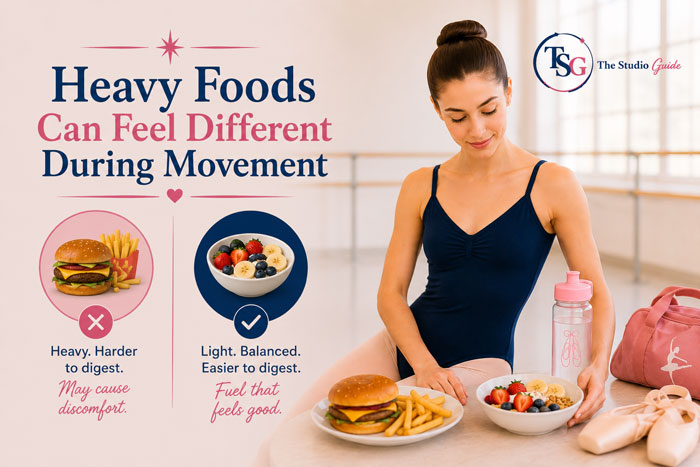
Heavy Foods Can Feel Different During Movement
Not all foods affect the body in the same way during physical activity.
Some foods digest more slowly and may leave dancers feeling overly full during movement. Greasy meals, extremely heavy foods, or very large portions may increase the likelihood of discomfort before class.
On the other hand, foods that provide balanced energy and are easier to digest are often more comfortable before physical activity.
Again, individual bodies respond differently. One dancer may tolerate certain foods very well while another may not.
Learning how your own body responds to different foods is an important part of becoming a healthy, self-aware performer.
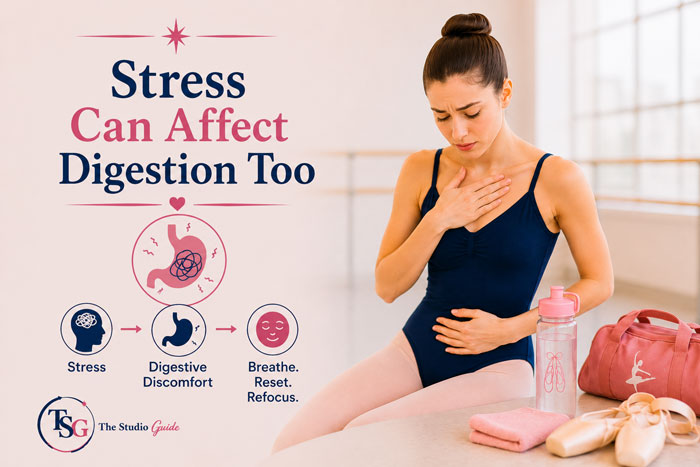
Stress Can Affect Digestion Too
Many dancers notice stomach discomfort before performances, auditions, or difficult rehearsals even when they have eaten normally.
Stress and anxiety can significantly affect digestion. Nervousness may contribute to nausea, loss of appetite, stomach tightening, or digestive discomfort before class or performance.
Young dancers sometimes worry that these feelings mean something is physically wrong, when in reality the nervous system is simply reacting to pressure or anticipation.
This connection between emotions and digestion is extremely common among performers and athletes.
Learning healthy stress-management habits, breathing techniques, and performance preparation strategies can sometimes help reduce these symptoms over time.

Recovery Nutrition Matters After Class Too
While pre-class nutrition is important, what dancers eat after class also matters.
Following intense activity, the body begins repairing muscles, restoring energy reserves, and recovering from physical stress. Balanced post-class meals and snacks can help support recovery and overall energy levels.
Dancers who consistently under-fuel after training may feel increasingly fatigued over time, especially during demanding rehearsal periods.
Healthy recovery habits are part of sustainable long-term dance training.
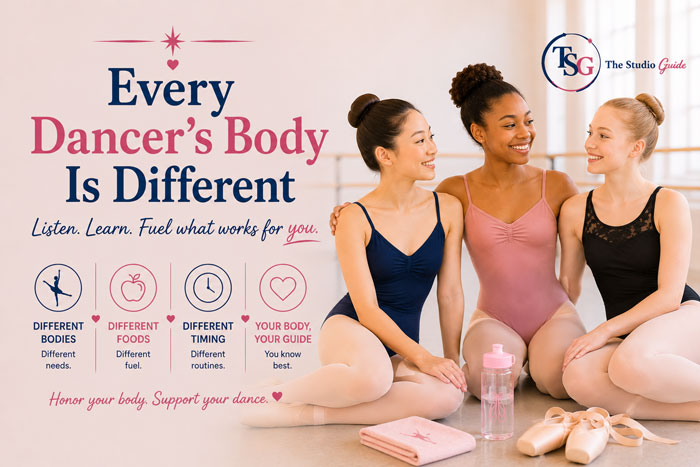
Every Dancer’s Body Is Different
One of the most important things dancers can understand is that there is no single “perfect” eating plan that works for everybody.
Bodies differ in:
- metabolism
- digestion
- energy needs
- sensitivities
- training intensity
- growth patterns
- schedules
Comparing eating habits with other dancers is rarely helpful.
Instead, dancers should focus on learning how their own bodies respond to different routines, foods, hydration habits, and training schedules.
Body awareness, consistency, and balance are usually far more valuable than extreme diets or rigid food rules.
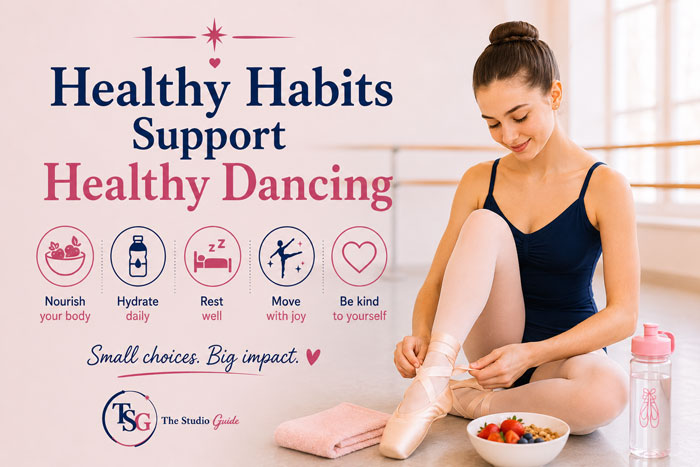
Healthy Habits Support Healthy Dancing
Dance places tremendous physical demands on the body. Proper nutrition helps support strength, endurance, concentration, recovery, and overall well-being.
Eating before class is not something dancers should fear or avoid. Instead, it is something dancers can learn to approach thoughtfully and intelligently over time.
Healthy dancers learn how to fuel their bodies in ways that help them move comfortably, recover effectively, and continue enjoying dance for many years to come.
Why This Matters
Understanding how food, hydration, timing, and stress affect the body can help dancers feel more confident and prepared before class.
The goal is not perfection. Every dancer occasionally experiences days where timing, energy, or digestion simply feels “off.” That is normal.
What matters most is developing healthy long-term habits, learning how the body responds to training, and recognizing that proper nutrition is an important part of becoming a strong and sustainable dancer.
This article is intended for educational purposes. It is not medical advice or a substitute for professional medical evaluation, diagnosis, or treatment.
Leave a Reply