
For many dancers, stomach discomfort can feel confusing, frustrating, and sometimes even a little frightening. A dancer may feel perfectly fine before class, only to suddenly experience cramps, tightness, nausea, bloating, or aching during rehearsal or performance. Some dancers notice discomfort during jumps or turns, while others experience it before stepping on stage for a competition or audition.
The good news is that stomach discomfort during dance is actually fairly common, especially among young dancers and highly active performers. In many situations, the problem is not caused by anything dangerous. Instead, the discomfort is often connected to muscle fatigue, breathing habits, stress, hydration, digestion, or tension within the body.
Understanding why these issues happen can help dancers feel less anxious, better understand their bodies, and train in healthier ways over time.

Dance Places Unique Demands on the Body
Dance is physically demanding in ways many non-dancers do not fully understand. Dancers repeatedly jump, balance, turn, stretch, stabilize, and control movement with tremendous precision. Unlike many sports or activities, dance also combines athletic movement with artistry, emotional expression, and constant body awareness.
Because of this, the body works extremely hard during dance classes and rehearsals – including the muscles surrounding the abdomen and torso.
Interestingly, what dancers describe as “stomach pain” is not always coming from the stomach itself. Sometimes the discomfort may actually involve tired abdominal muscles, strained hip flexors, tension around the ribs, or even stress-related tightness.
The entire core region works continuously during dance, and that area can become fatigued much more easily than many dancers realize.
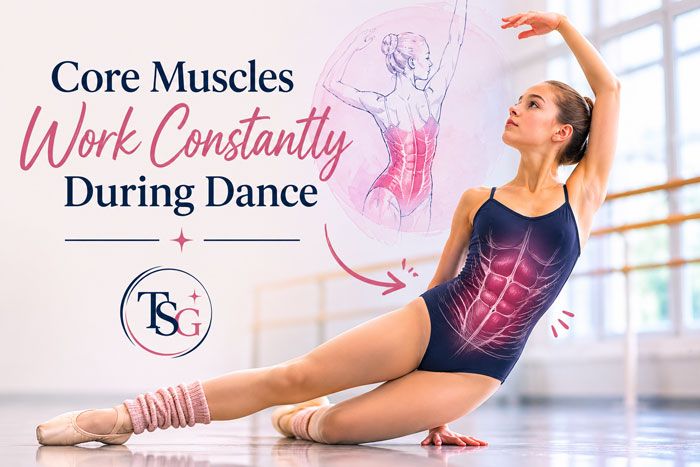
Core Muscles Work Constantly During Dance
One of the biggest reasons dancers experience stomach-area discomfort is because the abdominal muscles rarely get much rest during class.
The core helps control posture, alignment, balance, stabilization, and movement quality. During turns, jumps, extensions, and transitions, the abdominal muscles are constantly helping support the body.
After long rehearsals or intense training periods, those muscles can become sore or overworked. Young dancers sometimes mistake this muscular soreness for stomach illness because the sensations occur in the same general area.
This type of discomfort often becomes more noticeable:
- after returning from a break
- during convention weekends
- after learning challenging choreography
- during summer intensives
- when class schedules become unusually heavy
As dancers grow stronger and develop greater body awareness, they often become better at recognizing the difference between muscular fatigue and actual illness.
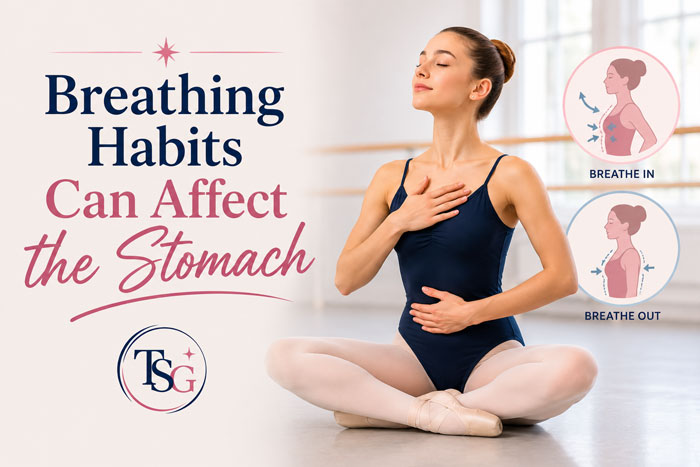
Breathing Habits Can Affect the Stomach
Many dancers unintentionally hold their breath while dancing.
This often happens during difficult combinations, challenging turns, or moments requiring intense concentration. Some dancers also tighten their stomach muscles excessively while trying to “hold” their technique.
Unfortunately, breath-holding and excessive tension can create tightness throughout the abdomen and diaphragm. Over time, this may contribute to side cramps, fatigue, nausea, or aching sensations around the stomach area.
Healthy movement requires controlled breathing. Strong technique does not come from rigidity. In fact, many highly trained dancers appear graceful partly because they move with efficient breathing patterns rather than excessive tension.
Learning how to stay relaxed while still maintaining control is an important part of dance training.

Eating Habits Can Influence Dance Comfort
Another common reason dancers experience stomach discomfort involves the timing of meals and snacks.
Eating a large meal immediately before dance class can make physical movement uncomfortable because the body is attempting to digest food while also supporting intense activity. This can sometimes lead to bloating, cramps, nausea, or sluggishness during class.
At the same time, not eating enough before class can also create problems. Dancers who arrive under-fueled may experience shakiness, weakness, dizziness, or nausea because the body simply does not have enough energy available to support movement.
Many dancers eventually learn that their bodies respond best to lighter meals or balanced snacks consumed well before class begins. Hydration also plays a major role in how comfortable the body feels during training.
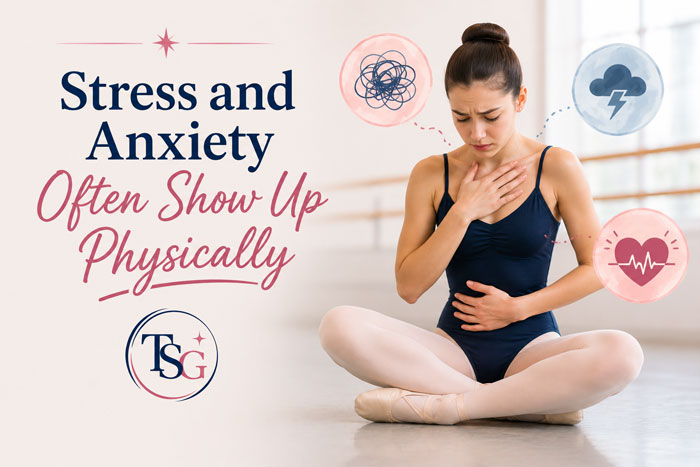
Stress and Anxiety Often Show Up Physically
The connection between emotions and physical symptoms is extremely strong, especially in dancers.
Many performers experience stomach discomfort before auditions, competitions, performances, or important rehearsals. Nervousness can trigger very real physical reactions throughout the body, including nausea, tightness, digestive upset, loss of appetite, or the familiar feeling often described as “butterflies.”
Young dancers sometimes worry that these sensations mean something is wrong with them physically, when in reality the body is simply reacting to pressure, excitement, or stress.
Dance can involve tremendous emotional pressure. Many dancers place very high expectations on themselves and work hard to avoid mistakes. Even highly experienced performers sometimes experience nervous stomach symptoms before going on stage.
Understanding that stress can create physical symptoms often helps dancers feel less alarmed when those sensations appear.
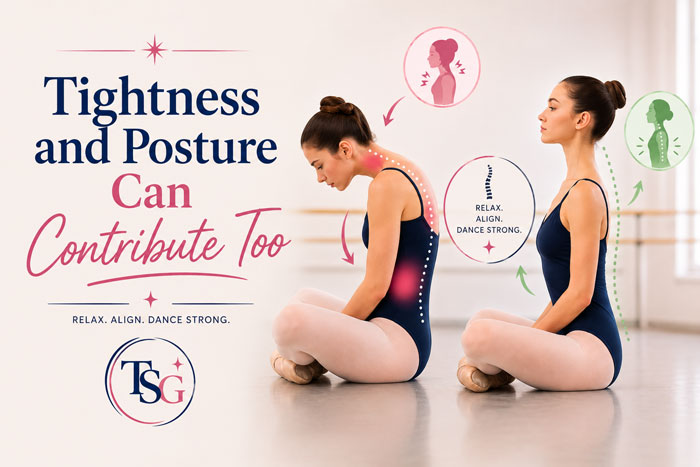
Tightness and Posture Can Contribute Too
The muscles surrounding the abdomen, hips, pelvis, and lower back are all closely connected.
If dancers develop excessive tightness in these areas, discomfort may spread throughout the torso and feel like stomach pain. Dancers who constantly grip their abdominal muscles or excessively arch their lower backs may place unnecessary stress on the front of the body.
Sometimes dancers are taught to “pull the stomach in” so aggressively that they create continuous tension instead of balanced core engagement.
Good technique actually requires a combination of strength and relaxation working together. The goal is not to squeeze every muscle as tightly as possible. Efficient dancers learn how to stabilize the body without creating unnecessary strain.
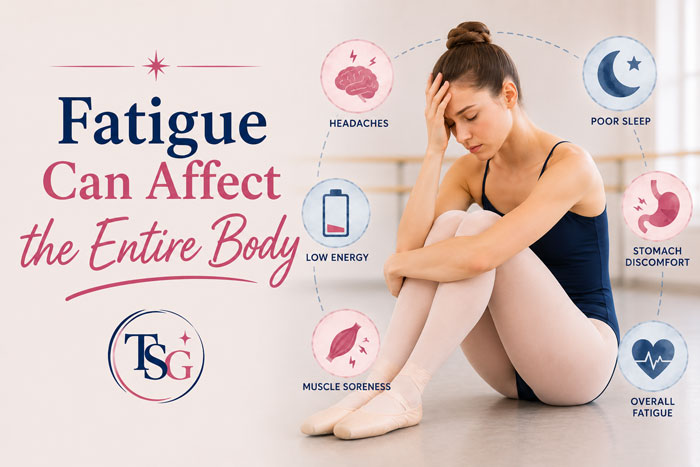
Fatigue Can Affect the Entire Body
Sometimes stomach discomfort is simply one of the body’s signals that recovery is needed.
Dance schedules can become extremely demanding, especially during competition seasons, rehearsals, conventions, or performance preparation periods. Without enough sleep, hydration, recovery, and nutrition, the body may begin showing signs of fatigue in many different ways.
For some dancers, those signs appear as headaches or muscle soreness. For others, stomach discomfort becomes one of the warning signals.
The body is not designed to operate at maximum intensity every single day without recovery. Rest and recovery are not signs of weakness. They are important parts of long-term athletic and artistic development.
When Should a Dancer Seek Medical Advice?
Although many causes of stomach discomfort are relatively minor, persistent or severe symptoms should never be ignored.
If pain becomes intense, continues repeatedly over time, interferes with daily activity, or includes symptoms such as vomiting, fainting, fever, or unexplained weight changes, dancers should speak with a parent, doctor, or healthcare professional.
Professional medical evaluation is always important whenever symptoms seem unusual, worsening, or concerning.
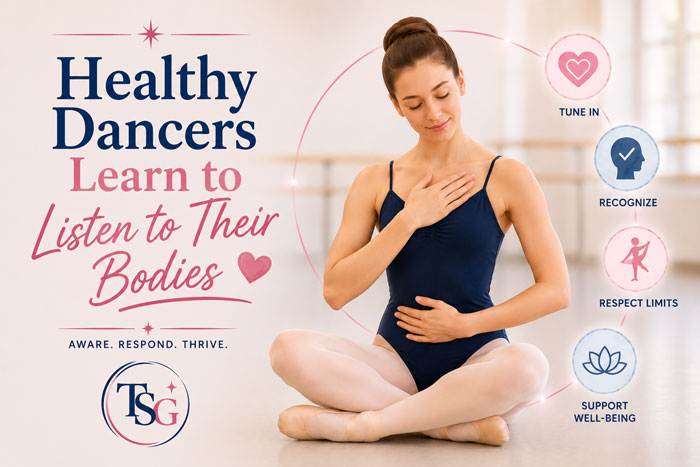
Healthy Dancers Learn to Listen to Their Bodies
One of the most important skills dancers can develop is body awareness.
Dance culture sometimes encourages students to ignore discomfort and simply push harder. While discipline and perseverance are valuable qualities, learning how to recognize fatigue, tension, dehydration, stress, and overtraining is equally important.
Strong dancers are not simply dancers who work the hardest. Often, they are the dancers who learn how to work efficiently, recover properly, and care for their bodies consistently over time.
Why This Matters
If your stomach hurts while dancing, you are certainly not alone. In many situations, the discomfort may be related to muscle fatigue, breathing habits, hydration, stress, digestion, or tension throughout the body.
As dancers learn more about how the body functions, they often become more confident, less anxious, and better equipped to care for themselves both inside and outside the studio.
Dance places incredible demands on the body, but healthy habits, smart training, and greater body awareness can help dancers move more comfortably, recover more effectively, and continue enjoying the art form they love.
This article is intended for educational purposes. It is not medical advice or a substitute for professional medical evaluation, diagnosis, or treatment.
Leave a Reply